
Warmforge Review: Is It Worth It for Cold Email Outreach?
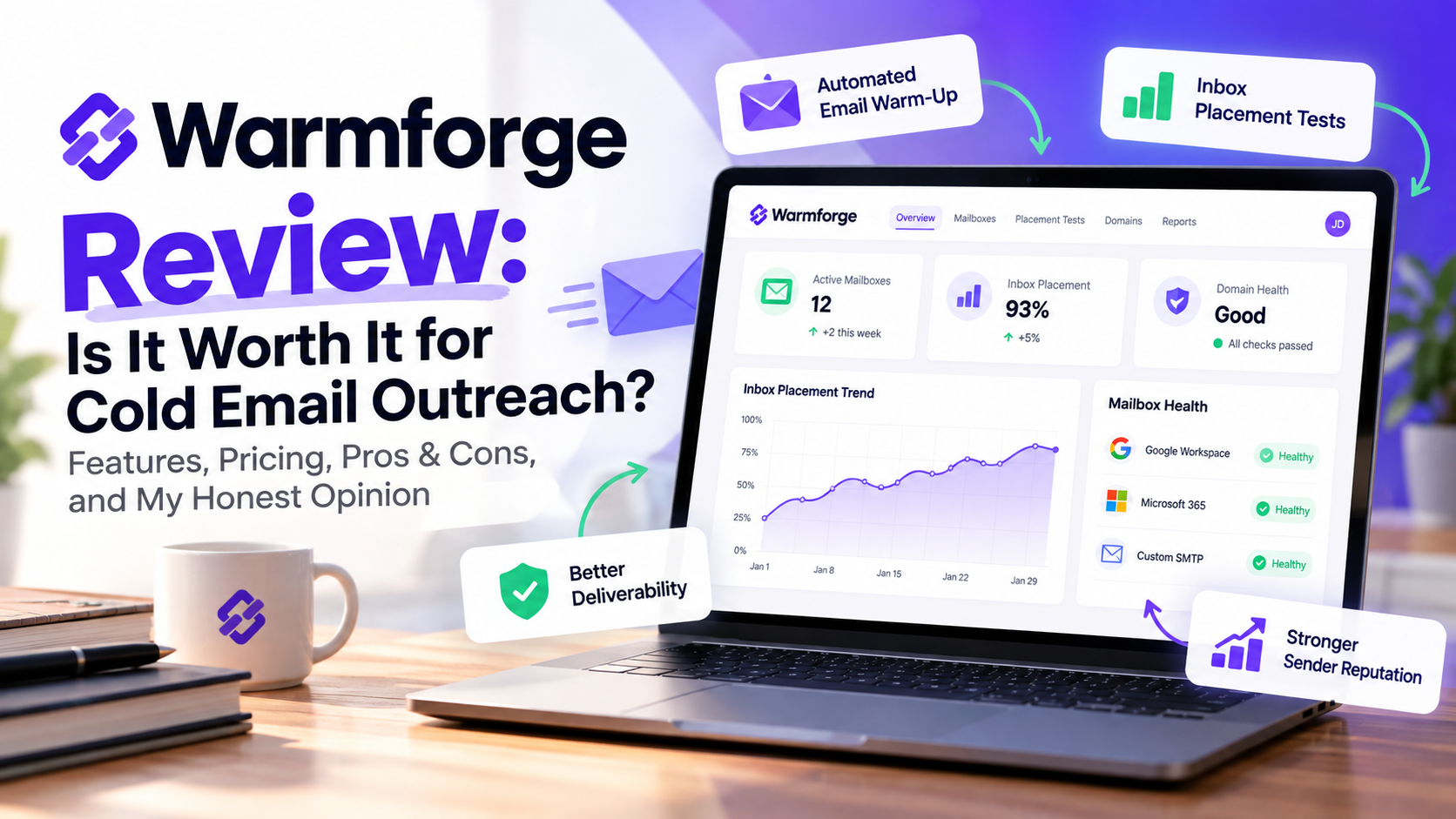
Cold email outreach can be one of the most effective ways to generate B2B leads, book meetings, and build relationships with potential customers.
But there's a problem that many businesses overlook.
It doesn't matter how good your cold email campaign is if your emails never reach the inbox.
You can have the perfect prospect list, personalized messaging, and a compelling offer. However, if your emails consistently land in spam folders, your results will suffer.
That's why email deliverability deserves just as much attention as prospecting and copywriting.
As someone who works with CRM systems, marketing automation, and B2B sales processes, I believe having the right infrastructure is essential for successful outbound campaigns.
And that's where Warmforge comes into the picture.
In this review, I'll explain what it does, how it works, its advantages and limitations, and whether it's worth considering for your cold email strategy.
What Is Warmforge?
Warmforge is an email warm-up and deliverability platform designed to help businesses prepare and monitor email accounts used for outbound communication.
Its primary purpose is to support healthier sending practices and help users understand whether their emails are reaching recipients' inboxes.
Unlike platforms such as Apollo or Lemlist, which focus heavily on prospecting and outreach campaigns, Warmforge focuses on the infrastructure behind email delivery.
Think of it this way:
Apollo helps you find potential customers.
Lemlist helps you execute outreach campaigns.
Warmforge helps you monitor and prepare the email accounts supporting those campaigns.
These tools address different parts of the outbound sales process.
Why Email Warm-Up Matters
When businesses start cold email campaigns, they often focus on how many emails they can send.
But email providers evaluate sending behavior and other signals to determine whether messages should reach the inbox or spam folder.
A newly created email account typically has little sending history.
If you immediately start sending large volumes of outbound emails, you may encounter deliverability problems.
Email warm-up attempts to address this by gradually establishing sending activity rather than jumping straight into high-volume campaigns.
However, warm-up isn't a guarantee of inbox placement.
Authentication, complaint rates, recipient engagement, list quality, and responsible sending practices remain critical.
This is why I view warm-up as one component of email infrastructure—not a replacement for a sound outreach strategy.
How Does Warmforge Work?
The platform is designed to automate parts of the email warm-up process while providing visibility into mailbox health.
Here's how the main capabilities fit together.
1. Automated Email Warm-Up
Instead of manually exchanging messages to establish sending activity, the platform uses automated email interactions.
This can reduce the administrative work involved in preparing multiple mailboxes for outbound campaigns.
For agencies and sales teams managing several sending accounts, that convenience can be valuable.
2. Inbox Placement Testing
One of the most useful capabilities is the ability to test where emails are landing.
Inbox placement tests help identify whether messages are reaching inboxes or being filtered into spam.
These tests provide diagnostic signals rather than a guarantee of future campaign performance.
Still, they're useful when troubleshooting deliverability problems before scaling outreach.
3. Mailbox Health Monitoring
Successful outbound operations require ongoing monitoring.
The platform provides tools for checking mailbox health and identifying potential issues.
This matters because deliverability isn't something you configure once and forget.
A mailbox that performs well today may encounter problems later if sending practices change.
4. DNS and Reputation Checks
Email authentication is another important part of deliverability.
SPF, DKIM, and DMARC help receiving servers evaluate whether messages are authorized and properly authenticated.
Monitoring these settings can help you identify configuration problems that deserve attention.
What I Like About Warmforge
It Focuses on a Real Problem
Many businesses invest in prospecting databases, outreach platforms, and AI personalization tools without giving enough attention to deliverability.
But if your infrastructure is unreliable, those investments may not produce the results you expect.
I appreciate tools that address an operational problem rather than simply promising more automation.
It's Useful for Managing Multiple Mailboxes
If you're running outbound campaigns across multiple email accounts, monitoring everything manually can become complicated.
A centralized approach to warm-up and health monitoring can make that process more manageable.
This is particularly relevant for lead generation agencies and B2B sales teams.
It Complements Your Existing Sales Stack
You don't necessarily need to replace your prospecting or CRM software to improve deliverability.
You can use a dedicated warm-up and monitoring platform alongside your existing tools.
That separation makes sense when your prospecting, outreach, and CRM processes are already working well.
It Encourages Better Deliverability Awareness
One of the biggest benefits of having dedicated monitoring tools is simply becoming more aware of your sending infrastructure.
Instead of discovering a problem after campaign performance drops, you have additional information to investigate potential issues.
That visibility can help teams make more informed decisions.
Where Warmforge Falls Short
No software is perfect, and it's important to understand what this platform doesn't do.
First, it isn't a complete sales engagement solution.
You'll still need other tools to find prospects, build sequences, manage replies, and track opportunities.
Second, automated warm-up cannot fix poor outreach practices.
If you're sending irrelevant messages, contacting unverified addresses, or ignoring email authentication requirements, warm-up alone won't solve your deliverability problems.
Finally, there is an ongoing cost to consider.
If you're only sending occasional emails from one account, a dedicated deliverability platform might be more than you need.
Warmforge Pricing: Is It Worth the Investment?
The platform uses mailbox slots for its warm-up service, so the number of accounts you want to manage matters when evaluating costs.
According to its official website, you can explore the platform without purchasing a subscription, but activating mailbox warm-up requires paid slots. It also advertises a free placement test.
For businesses managing several outbound accounts, the investment may be justified by the convenience of centralized monitoring and automated warm-up.
However, I wouldn't recommend buying any deliverability tool without first evaluating your sending volume, existing software, and actual needs.
You can review the latest plans and offers on the Warmforge website.
Who Should Use Warmforge?
I think this platform makes the most sense for businesses that depend on consistent outbound email activity.
B2B sales teams can use it to monitor the health of mailboxes supporting prospecting campaigns.
Lead generation agencies may benefit from managing multiple client mailboxes through a dedicated deliverability platform.
Marketing consultants can incorporate deliverability monitoring into broader outbound strategies.
Startups building their first outbound sales process can use it to better understand email infrastructure before scaling.
If your business relies primarily on inbound marketing or occasional one-to-one emails, you may not need a specialized warm-up platform.
My Verdict: Is Warmforge Worth It?
Yes, it's worth considering if cold email outreach is an important part of your B2B lead generation strategy.
I particularly like its focus on automated warm-up, mailbox health monitoring, and inbox placement testing.
These aren't necessarily the most exciting parts of sales and marketing, but they can have a meaningful impact on your ability to reach prospects.
That said, I wouldn't treat any warm-up service as a guarantee of better deliverability. Its effectiveness depends on your infrastructure, sending practices, and the policies of receiving email providers.
For teams that regularly manage multiple outbound mailboxes, the convenience and visibility may justify the investment.
For businesses just getting started, I'd recommend exploring the platform, testing your current deliverability, and determining whether a dedicated solution makes financial sense.
Ultimately, successful cold email outreach requires more than a good prospect list and compelling messaging.
You also need reliable infrastructure and a responsible sending strategy.
If you're looking to strengthen that part of your outbound process, explore Warmforge and see whether it fits your business.
If you need help setting up Warmforge, get in touch with me.